
Opinion
He Betrayed Gani Fawehinmi, He Betrayed Abubakar Rimi, He Betrayed The Struggle For Democracy, Who is El-Rufai? – By Omotayo Kehinde

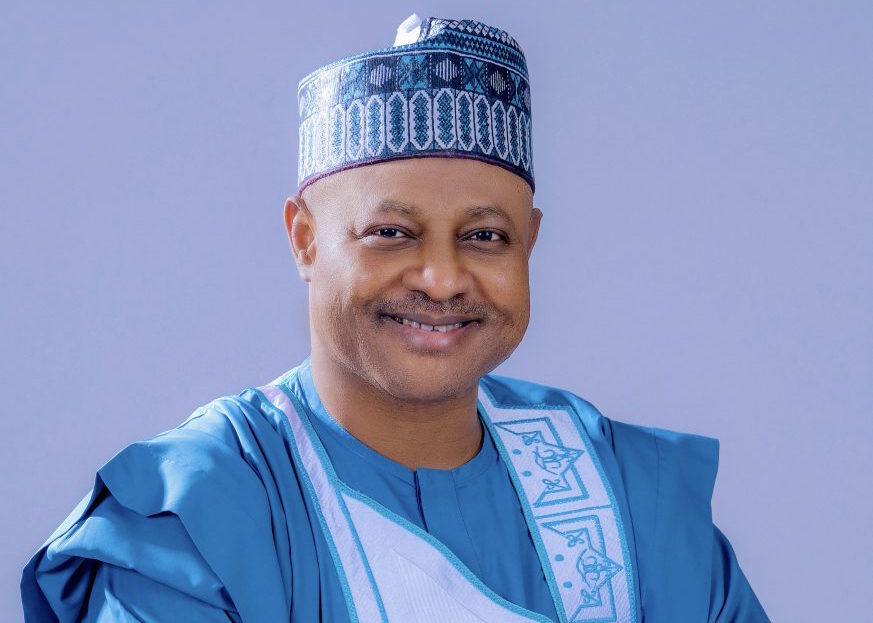
He Betrayed Gani Fawehinmi, He Betrayed Abubakar Rimi, He Betrayed The Struggle For Democracy, Who is El-Rufai? – By Omotayo Kehinde
Reading this 2007 The Week magazine article it was as though I am reading what is happening today, so Uba Sani has always been Uba Sani.
Political drama unfolding in Kaduna State between Governor Uba Sani and his predecessor, Nasir El-Rufai, has captured national attention, but I guess for those who have followed Uba Sani’s trajectory closely, the current betrayal narrative is hardly surprising. What El-Rufai supporters now describes as a painful act of treachery from his once-trusted protégé is merely a repetition of a pattern that was meticulously documented nearly two decades ago.
In 2007, THEWEEK magazine published a damning investigation that peeled back the layers of Sani’s carefully constructed public persona as a human rights and pro-democracy campaigner, revealing instead a man who had allegedly served as a mole for the Abacha regime, betraying the very activists with whom he pretended to stand shoulder to shoulder.
The revelation that Uba Sani has now turned on El-Rufai, the man who championed his political rise and ensured his succession as Kaduna State governor, would have come as no shock to those who remembered his past. El-Rufai himself has publicly branded Sani a betrayer, stating in a television interview that “he was my boy, my mentee,” and later declaring bluntly, “I have never called Uba Sani since I left office. Never. Not once. I have no relationship with him.” When a social media user, Imran U Wakili posted Sani’s image with the caption “The face of a betrayer,” El-Rufai responded with a laughter emoji and the words, “He betrayed himself and lost a friend,” but the sting of personal betrayal is palpable in every utterance, even as he tries to mask it.
The 2007 investigation by THEWEEK paints a portrait of Sani that stands in stark contrast to the democratic credentials he so frequently claims today. According to the article, Sani was compromised by security agents in June 1994 and subsequently became an informant and agent provocateur to the State Security Service, feeding them with programs of the pro-democracy community. His actions, the investigation revealed, led directly to the arrest of several activists and security raids on the houses and offices of such prominent figures as Dr. Beko Ransome-Kuti, Barrister Femi Falana, Chief Gani Fawehinmi, and Sylvester Odion-Akhaire.
The article specifically notes that “Uba’s action had also led to the raid on the homes of the late Col. Yohanna Madaki (former administrator of Gongola State) and Mallam Balarabe Musa,” with Madaki severing all contacts with Uba Sani after warning from sympathetic SSS men, and calling Beko’s attention to the fact that Uba “was not an activist but a mole to spy on activists.” Beko, the article recounts, gave Uba the benefit of doubt until security men raided his home and confronted him with the proceedings and resolutions of CD meetings, proof that the information had indeed been leaked. Even journalists in Kaduna who were close to him were sold out to security agents, including Henry Ugbolue of TheNews, and Uba Sani was paid for every piece of information he passed on, working closely with one Gadzama, who was the Kaduna State director of SSS at the time. Sani also allegedly fed the late Wada Nas with information about the activities of human rights groups, and Nas became fully dependent and got his relevance in the Abacha regime as a result of the information given to him by Uba Sani, according to the investigation.
Perhaps the most damning revelation came in 1997, when Sani approached Col. Abubakar Umar for airfare to attend a conference organized by the International Human Rights Law Group in Ghana, purportedly to strategize against the Abacha regime. Col. Umar innocently gave Uba air fare tickets to Ghana and South Africa, but the purported trip to South Africa was a bogey by Uba to extort money from Umar, while he actually traveled to Accra, Ghana, to attend the summit with security high technology recording devices provided by Gadzama, recorded all the proceedings, gathered all documents, and brought them back to Nigeria, delivering them directly to Nas’ office.
The human rights community and the likes of Umar and others were shocked when Nas went on primetime network news, brandishing documents and proceedings of the meeting in Ghana which ought to have been confidential documents on how the human rights community could tackle the Abacha regime, the article states, adding that in some cases Uba formulated and concocted his own stories to feed Nas, like the purported armed invasion of Nigeria and bombings.
This is the man who today claims the mantle of democracy and uses the language of inclusion and good governance to justify his actions against El-Rufai. The current rift centers on a probe launched by Sani’s administration into El-Rufai’s tenure, which accused the former governor of mismanaging some N423 billion, leading to El-Rufai being sent to anti-graft agencies for prosecution. For El-Rufai and his loyalists, this represents the ultimate betrayal, a protégé using state power to destroy his benefactor, but the truth is far more uncomfortable for those who once believed in Sani’s democratic credentials.
El-Rufai himself had warned of the nature of power, once sharing advice from a former military president “Even if your biological son sits in that chair of power, the first day he will greet you as his father, the second day he will sit in his seat, and the third day, if you don’t greet him respectfully, bad things can happen. That is the nature of power.” It seems Sani has internalized this lesson with the same ruthless pragmatism he displayed during the Abacha years, when he leveraged his position within the pro-democracy movement to curry favor from the very regime he pretended to fight. The warning signs were there for all to see, but they were ignored. The Nigerian Probity Forum had taken on Sani, and the President of Arewa Youth Consultative Forum, Mallam Shetimah Yerima, had advised the presidential spokesman to exercise restraint on castigating political opponents of the president, warning that he was not a saint and reminding him of the destructive and treacherous activities carried out during the Abacha regime where most strategies of the Campaign for Democracy which he coordinated in the North were revealed to the regime and comrades were given away.
Even the Former governor of Kano State, Alhaji Abubakar Rimi, had similarly threatened to open a can of worms on Sani’s past. They all knew what many are only now beginning to understand, that Uba Sani is not of democracy, that his activism was a mask, and that the man who betrayed Gani Fawehinmi (The man today he claimed so much to be a protege of), Femi Falana, Beko Ransome Kuti, and countless other genuine pro-democracy fighters to the military regime was never going to show loyalty to anyone, least of all to a political godfather whose usefulness had expired.
The tragedy of the current situation is that El-Rufai, a political genius in his own right, appears to have learned this lesson too late, only after the betrayal has been consummated.
Today, Uba Sani has new targets that includes former political adversaries, reaching across party lines to include figures like former Vice President Namadi Sambo and former Governor Ahmed Makarfi, projecting an image of inclusion and dialogue while simultaneously deploying the tools of state power against his former mentor, This article and what he is doing to Mallam Nasir El-Rufai should be a lesson to them.
El-Rufai’s response to the betrayal, captured in that telling laughter emoji and the words “He betrayed himself and lost a friend,” reveals the deep personal hurt of a man who believed he could immunize himself against the very political treachery he had often spoken against. But the truth is that Sani’s betrayal of El-Rufai is not a new chapter in his political life, it is simply the latest verse in a song that has been playing since the dark days of Abacha, when Sani allegedly betrayed the very fighters for democracy to a brutal military regime.
The 2007 THEWEEK investigation, which meticulously documented his role as a military mole, stands as a prophetic warning that was ignored by those who chose to see in Sani a reformed activist rather than a man who had perfected the art of self-preservation through betrayal. The investigation revealed that Sani, behind the mask of a human rights and pro-democracy campaigner during the military regime, was a mole who had used his position to curry favour from the same persons he was said to be fighting and in the process betrayed other activists who were hauled into detention during the military era.
That he would do the same to El-Rufai was not just predictable, it was inevitable, and the sad truth is that we simply did not know him, or perhaps we chose not to see what was always there, a man who has consistently prioritized his own advancement over loyalty, principle, or any genuine commitment to the democratic ideals he now so readily claims to champion.