Opinion
Presidential Handlers & The Flight From Truth – Abdul Mahmud

Presidential Handlers & The Flight From Truth – Abdul Mahmud
Every government, however popular at its inception or confident in its own judgment, eventually confronts a danger far more destructive than organised opposition or electoral defeat: the gradual emergence of an intellectual and physical barrier around power, a wall constructed by gatekeepers who assume responsibility not merely for managing physical access to the ruler, but for systematically managing the ruler’s understanding of the nation itself. Centuries ago, this dangerous insulation was vividly captured in a classic Sufi anecdote involving the Abbasid Caliph Harun al-Rashid and the wise mystic, Bahlul. Spotting the dervish sitting on a heap of dirt in a graveyard playing with old bones, the Caliph stopped his grand procession and offered Bahlul a life of comfort inside the royal palace.
Bahlul looked up from the mud and refused, declaring that he had intentionally stopped himself from ever entering the palace gates because the court was a house of illusions. He challenged the Caliph with three simple questions: could the Caliph’s doctors expand his life when disease struck, could his vast armies fight off the Angel of Death, or could his massive treasury bribe the angels of judgment in the grave?
The Caliph had no answers to Bahlul, who warned that rulers who build walls to shut out reality eventually end up forgotten in the dirt. In the modern era, the presidential palace is a stately mansion of illusions, where proximity to power transforms constitutional authority into a curated fantasy world.
History demonstrates with remarkable consistency that rulers rarely become isolated from their citizens by accident. The isolation is carefully cultivated around them by handlers who believe that protecting authority requires protecting it from presumed discomfort.
Within these modern palace walls, every constructive criticism and dissenting voices are treated as open hostility and evidence of a political conspiracy. In time, access to power becomes increasingly restricted until official optimism bears no resemblance to the harsh conditions experienced by ordinary citizens. Presidential handlers, who then begin making critical decisions on the basis of curated narratives rather than lived reality, imagine they are preserving the president’s dignity; but they are actually carving out a vacuum that detaches the state house from the streets.
It is impossible to observe the recent attacks on Cardinal John Onaiyekan within Nigerian political discourse without recognising this familiar, self-destructive tendency. Speaking with the restraint and moral clarity that has characterised the cardinalcy for decades, Onaiyekan directly informed President Tinubu that Nigerians are suffering and that the country is bleeding under the combined weight of economic hardship, insecurity, and declining living standards. His observations contained nothing revolutionary or extraordinary.
They merely reflected the obvious concerns that have been voiced daily by Nigerians. The Cardinal spoke precisely like Bahlul, while standing outside the presidential palace to hold up a mirror of truth to President Tinubu.
The response from some of the president’s most vocal defenders followed a defensive pattern that has become dangerously familiar. Rather than confronting the substance of the Cardinal’s remarks, attention was immediately shifted to questioning his personal motives, suggesting partisan bias, and portraying his intervention as though it constituted a malicious attack upon the Presidency itself.
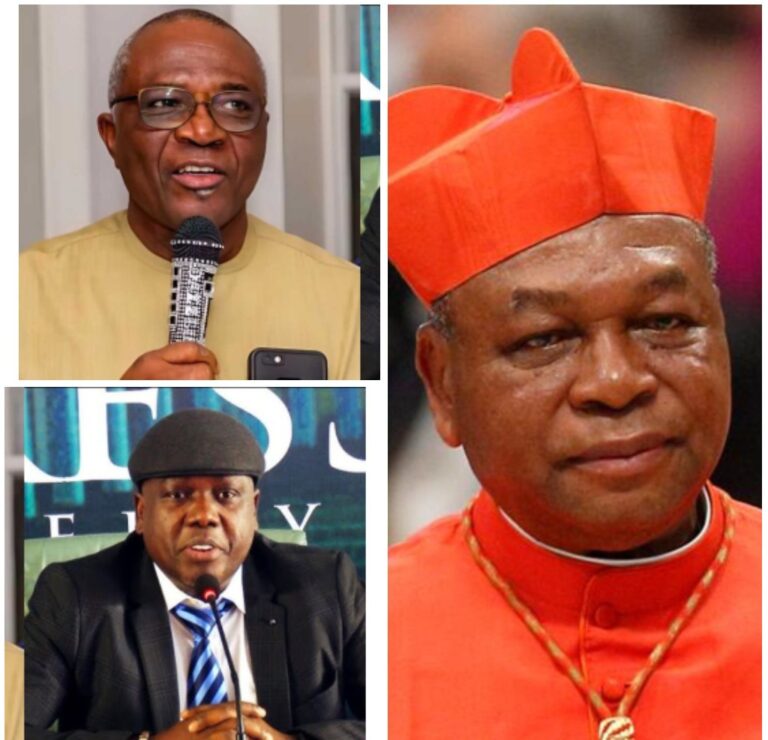
The public argument ceased to concern Nigerians who are experiencing hardship and became instead a coordinated attempt to diminish the respected Cardinal. Such reactions illuminate the broader problem within contemporary governance where the aggressive defence of authority completely substitutes for an honest engagement with truth. When presidential handlers treat respected moral voices as political adversaries, they reveal a deep-seated fear of reality. Temitope Ajayi, Daniel Bwala and their likes act as if shielding the President Tinubu from uncomfortable facts is a form of loyalty, failing to see that they are trapping him inside a dangerous echo chamber.
These handlers who instinctively attack every critic in defence of the President imagine themselves to be protecting his political standing. In reality, they are achieving precisely the opposite result. A President who hears reassurances and manufactured optimism gradually loses the capacity to distinguish genuine policy success from public relations propaganda. Every President requires unvarnished information about the human consequences of his policy choices, particularly when those policies impose severe burdens upon citizens. Such information cannot emerge if every uncomfortable observation is dismissed as hostility before it receives honest consideration.
By silencing the voices of warning, the handlers do not protect the President; they blindfold him.
Cardinal Onaiyekan and other religious figures occupy a distinctive moral place within this democratic conversation. They possess no constitutional authority to formulate public policy. Their influence rests instead upon the moral credibility acquired through decades of direct engagement with citizens experiencing the painful realities of life. They bless marriages, baptise children, bury the dead, comfort and counsel families confronting absolute poverty. When such figures speak about the suffering of the people, they are reporting lived experiences of ordinary Nigerians, much like Bahlul speaking from the dirt heap of Baghdad.
To respond to such a warning by questioning motives rather than examining the condition described is to completely misunderstand the proper relationship between moral counsel and political authority. Democracies flourish only when governments remain willing to hear uncomfortable truths from voices outside the arena of partisan competition.
History offers an unyielding lesson here. Administrations rarely fail because critics speak too freely; they fail when those entrusted with influence become so invested in defending official narratives that they gradually cease distinguishing between political messaging and objective reality. Once that boundary disappears, leaders begin governing an imagined country created by flattering reports. Here, too, policies become detached from human experiences and denial acquires the appearance of patriotism. Handlers ensure that the President stays comfortable inside the state house of illusions, while the foundations of the state crumble outside.
The health of any constitutional democracy depends upon preserving the unobstructed path between the experiences of the governed and the understanding of those who govern. Whenever that path becomes crowded by handlers more interested in protecting authority than communicating reality, both the President and the nation suffer together.
It is fitting, therefore, to return to the story with which I began. Mr President, Bahlul famously asked the Caliph whether his physicians could prolong his life when illness came, whether his vast armies could repel the Angel of Death, or whether his overflowing treasury could bribe the angels who would question him in the grave. If the answer to each question was no, Bahlul reminded him that power had limits and humility was indispensable.
I ask you the same question: if you cannot do any of these things, then, at the very least, let Nigerians breathe. That, in essence, was what Cardinal Onaiyekan asked.