POLITICS
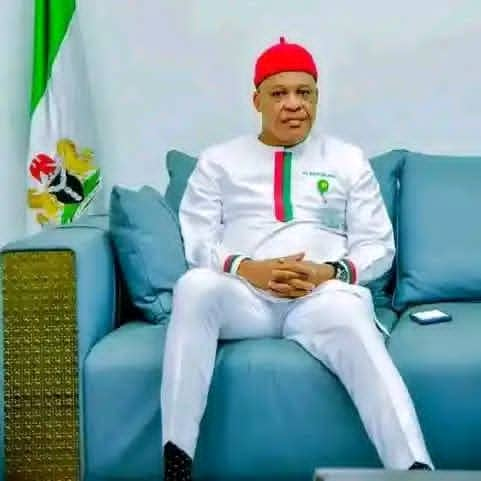
Aguocha: Stop The Political Hypocrisy! You Cannot Preach Against Political Slavery While Dodging Questions About Your Own Political Network – By Mandate 27 Group

Aguocha: Stop The Political Hypocrisy! You Cannot Preach Against Political Slavery While Dodging Questions About Your Own Political Network – By Mandate 27 Group
The latest rejoinder issued in defence of Hon. Obi Aguocha, challenging Rt. Hon. Engr. Chinedum Enyinnaya Orji to name an alleged councillor brother, is another attempt to divert public attention from the more fundamental questions surrounding Aguocha’s political rhetoric, his own political relationships and the glaring inconsistency in the arguments advanced by his camp.
Let us be clear: Rt. Hon. Engr. Chinedum Enyinnaya Orji does not need to be lectured on political representation by people who appear determined to turn every disagreement into an opportunity to attack his person and family. If Aguocha wishes to make political concentration the subject of public debate, then he must be prepared to answer questions about the political relationships surrounding him. He cannot demand scrutiny of another political camp while expecting his own environment to enjoy political immunity.
Aguocha cannot monopolise the language of accountability, define political slavery to suit his arguments and then demand silence when the same questions are directed towards his own political circle.
THE MAN PREACHING AGAINST POLITICAL CONCENTRATION MUST ANSWER QUESTIONS ABOUT HIS OWN CIRCLE
Obi Aguocha is the serving member of the House of Representatives representing Ikwuano/Umuahia North/Umuahia South Federal Constituency. As a federal legislator, he has a responsibility to engage the public on the substance of representation, constituency development and the principles guiding his political conduct.
Yet, rather than keeping the conversation focused on verifiable records and the quality of representation, his camp has chosen to launch a provocative attack on Chinedum Orji, invoking family history and accusations of political inheritance.
Very well. If that is the battlefield Aguocha has chosen, then the public is entitled to ask him questions about the political relationships within his own circle.
Who is Aham Uko? What public offices has he held? What is his relationship with Aguocha? What political responsibilities has he undertaken? And why should these questions be considered inappropriate when Aguocha’s supporters have made family connections a central weapon in their criticism of Chinedum Orji?
These are straightforward questions, and no amount of political grandstanding should make them disappear.
AHAM UKO: AGUOCHA’S IN-LAW AND A FORMER TWO-TIME COMMISSIONER
Aham Uko is Obi Aguocha’s in-law. He previously served as Commissioner for Environment and subsequently as Commissioner for Finance in Abia State. He has also been identified in the political narrative surrounding this controversy as the Labour Party campaign director for Umuahia North, particularly the Ohuhu axis.
That is a substantial political profile to leave out of a discussion supposedly concerned with political influence and the distribution of power.
Aham Uko’s history of public service and his relationship with Aguocha do not, by themselves, establish wrongdoing. But they are relevant to the very subject Aguocha and his supporters have chosen to place before the public.
Why is Chinedum Orji’s family history fair game, but Aguocha’s relationship with his own in-law suddenly becomes an uncomfortable subject?
Why should the public be encouraged to scrutinise one political network while being discouraged from asking questions about another?
Aguocha cannot have it both ways. If family connections are to be weaponised in political arguments, then he must accept that the same subject will be examined in his own political environment. If his camp wants to argue that family relationships do not automatically establish wrongdoing, then it must stop using family relationships as automatic proof of wrongdoing against its opponents.
Either way, the selective application of political standards is indefensible.
UZO UKO: ANOTHER NAME THAT CANNOT BE SWEPT UNDER THE CARPET
The name Uzo Uko has also featured in the allegations raised by Aguocha’s critics, who identify him as a councillor representing the ward associated with the federal lawmaker.
The exact councillorship and ward should be established through official records. Nevertheless, the political question remains: why does Aguocha’s camp insist that every detail of an allegation against Chinedum Orji must be publicly interrogated while resisting comparable scrutiny of the political relationships attributed to its own circle?
The rejoinder insists that Aguocha has no biological brother serving as a councillor. That is a specific denial of a specific relationship. It does not answer every broader question about political associations and influence.
If the original statement specifically identified a biological brother, the name and relationship should be verified. But Aguocha’s camp cannot use that narrow dispute to declare the entire conversation about political concentration closed.
The public is entitled to ask questions, and political officeholders must learn to distinguish legitimate scrutiny from personal persecution.
WHAT KIND OF POLITICAL ACCOUNTABILITY OPERATES ONLY AGAINST OPPONENTS?
This is the central contradiction in Aguocha’s political narrative.
When the subject is Chinedum Orji, Aguocha’s camp is prepared to invoke family history, political succession and the distribution of public offices. Yet, when attention turns to Aguocha’s in-law, Aham Uko, his previous commissioner portfolios and his reported Labour Party campaign role, the conversation risks being dismissed as irrelevant.
That is not a coherent political principle. It is a selective argument designed to place an opponent permanently on the defensive.
Political accountability cannot function according to the convenience of the person making the accusation. If a politician believes that family relationships and political influence deserve public scrutiny, that standard must apply consistently. If he believes that relatives and in-laws have independent rights to public service, then he cannot simultaneously use their relationships as automatic evidence of misconduct against others.
Aguocha must decide which principle he actually believes in.
The people of Ikwuano, Umuahia North and Umuahia South are entitled to ask why the same standard is not being applied across the political divide.
CHINEDUM ORJI’S RECORD SHOULD NOT BE REDUCED TO FAMILY NAME-CALLING
The attempt to turn the political history of Chief Theodore Ahamefule Orji into an all-purpose weapon against Rt. Hon. Engr. Chinedum Enyinnaya Orji does not settle the question of representation.
Chinedum Orji served in the Abia State House of Assembly, including as Majority Leader and Speaker. His public record should be discussed through his legislative responsibilities, political leadership and contributions during his time in office.
The fact that his father also held prominent public offices does not, by itself, establish that Chinedum Orji inherited a political position unlawfully or that his public service should be dismissed as political slavery.
Aguocha’s camp must provide more than provocative language if it wants the public to accept such a conclusion. Historical facts must be interpreted responsibly, and accusations must be supported by evidence.
Chinedum Orji should not be expected to accept a political narrative in which his family background is used to discredit him while the political connections of others are placed beyond discussion.
AGUOCHA MUST ANSWER THE BIGGER QUESTION
The debate is not simply about whether one alleged councillor is a biological brother. It is about the consistency of the principles being advanced in Abia politics.
Aguocha is a federal lawmaker. Aham Uko, his in-law, has served as commissioner for two different portfolios. Uko has also been identified in the political discussion as a Labour Party campaign director for Umuahia North. Uzo Uko has been identified by Aguocha’s critics as a councillor associated with Aguocha’s ward.
These names and positions provide the basis for legitimate questions about political relationships and influence. They do not, without further evidence, establish wrongdoing. But neither should they be deliberately excluded from a debate that Aguocha’s camp has itself framed around political concentration.
The questions are simple. Why is political concentration a serious issue when discussing Chinedum Orji but apparently less worthy of scrutiny when discussing Aguocha’s own circle? Why should one politician’s family background dominate the conversation while another politician’s in-law and political associations are treated as distractions?
And why should the people of Abia accept a political debate in which the accuser decides which relationships may be examined and which must be ignored?
THE FINAL WORD: POLITICAL ACCOUNTABILITY IS NOT A ONE-WAY STREET
Obi Aguocha and his supporters must understand that political rhetoric comes with consequences. Once they choose to accuse opponents of political slavery, they invite questions about the consistency of their own arguments.
They cannot demand transparency from Chinedum Orji while resisting scrutiny of Aguocha’s relationship with Aham Uko. They cannot invoke family connections as evidence against an opponent and then insist that comparable relationships are irrelevant when discussing their own political circle.
Aguocha’s camp must stop confusing the ability to issue a combative press statement with the ability to win a substantive argument. Political grandstanding does not answer questions about representation, political relationships or consistency.
The people of Ikwuano, Umuahia North and Umuahia South deserve a more serious political conversation, one based on verifiable records, clear principles and equal standards of accountability.
Rt. Hon. Engr. Chinedum Enyinnaya Orji’s public service should be examined on its merits, not reduced to a campaign of insinuations about his family. Equally, Aguocha must accept that his own political relationships are legitimate subjects of public discussion when he chooses to make political concentration the basis of his attacks.
The question Aguocha’s camp must now confront is this: if political slavery is the charge you are so eager to level against others, why should the political relationships surrounding you be exempt from the same questions you insist everyone else must answer?
Abia politics must move beyond selective outrage. Accountability cannot belong exclusively to those who use it as a political weapon. And no federal lawmaker should imagine that occupying public office gives him the privilege of interrogating everybody else while escaping scrutiny himself.