NEWS
Outrage as Reps Move to Pass State Police Bill Without Public Hearing or Full Disclosure

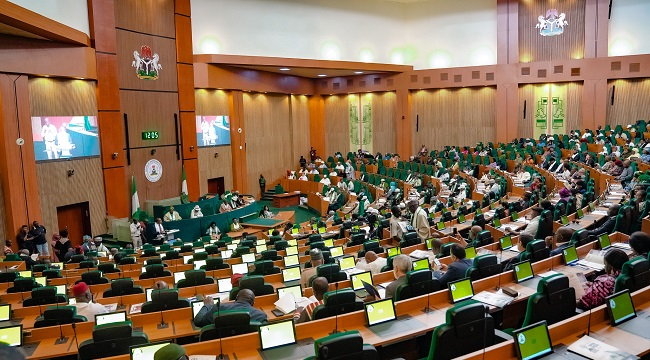
Fresh concerns have emerged over the National Assembly’s handling of the proposed State Police Bill as the House of Representatives is reportedly preparing to adopt and pass the Senate version of the legislation with little public explanation.
The development has sparked criticism from lawmakers, constitutional experts, and civil society groups, who argue that a bill capable of fundamentally reshaping Nigeria’s security architecture is being processed without adequate transparency or public participation.
According to observers, no public hearing has been conducted on the proposed legislation, while the full contents of the bill have not been made available to Nigerians. Critics also point out that there has been no extensive public debate on a proposal that would significantly alter policing responsibilities and the financial obligations of state governments.
At the heart of the proposed legislation is a provision that transfers the responsibility for establishing, funding, and operating police forces from the Federal Government to individual state governments.
If passed, each state would be required to finance and manage its own police service, marking one of the most significant constitutional and security reforms in Nigeria’s democratic history.
The proposal is expected to have far-reaching implications for governance, internal security, fiscal responsibility, and the balance of powers between the Federal Government and the states. Despite its significance, many Nigerians say they have not been given access to the draft bill or an opportunity to examine its provisions.
Critics have questioned why neither the Senate nor the House of Representatives has made the bill publicly available or created room for meaningful citizen engagement before moving toward its passage.
Some observers have compared the current process to the passage of the Electoral Act, arguing that many Nigerians only became aware of critical provisions after the legislation had already been approved.
Speaking during an Arise TV town hall on the issue, constitutional lawyer Prof. Chidi Odinkalu cautioned against what he described as the “grave dangers” posed by the absence of public consultation, warning that sidelining citizens in such an important constitutional matter could have lasting consequences for Nigeria’s democracy.
The controversy has also drawn criticism toward opposition political parties, with some commentators accusing them of failing to provide effective oversight or resistance to the legislative process.
One commentator remarked, “This is the worst set of opposition we have in this country. They are too docile, too lacking in focus, too uncoordinated.“
Legal experts and civic advocates insist that a constitutional amendment of this magnitude should not be concluded behind closed doors.
Describing the process as “a quiet erosion of the public’s right to know,” analysts argue that Nigerians deserve access to the contents of the bill and the opportunity to contribute before it becomes law.
A civic leader at the Arise TV town hall stressed the importance of public involvement, stating, “State Police cannot just be handed down to Nigerians without citizens making significant inputs. It doesn’t make any sense.“